Recognizing the Origins of US Cities and Places

Many cities throughout the US have names that acknowledge their roots. For example, traveling in the west and southwest, many cities and towns have Spanish names. Sacramento, Las Vegas, and Las Cruces are just a few. In the midwest, cities like Waukesha, Manitowoc, and Winamac reflect Native American populations.

Given the sweeping influence both the Mexican and Native American cultures have had in forming the US, I have two proposals. Not only are these practical suggestions, but they squarely address the sometimes-shortsighted sentiment of the current US population (broadly-speaking).

Proposal #1

First, someone living in a city with a Spanish name, or resides or works on a street that’s named after a Spanish word, that person may not grumble about any increases in the Latinx or Hispanic populations. Instead, local government policies and the citizens must openly welcome those people “home.” If the people are not welcoming, then the local government must re-brand. For example someone living on Rio Bonita Road in Las Vegas, Nevada, would need to, at a minimum, change the name to Pretty River Road in The Meadows, Snowy.

(As an aside, many European settlers did not devise particularly clever names for the communities they established. There are thousands of Lincoln, Washington, Jefferson, Franklin, Salem, and Springfield roads, cities, and counties. So, if you are a government official deciding to go through the effort of re-branding your town due to your citizens’ exclusionist tendencies, please do put your heads together to pick something more clever and unique. If you need some branding suggestions, I suggest either of these leading firms: Hernandez and Garcia, LLC, or Gabriella Ortega Marketing.)

Proposal #2

My second proposal requires some backdrop. Not only did the US government systematically seek to destroy Native American life, but as a further injustice, they herded people into reservations on foreign lands. To add insult to injury, the European settlers retained some of the exotic Native American names for buildings, streets, and towns (i.e., “We want you outta here, but…. we we’re gonna keep some of your cool-sounding words”).

In exchange, the foreign reservations were assigned unimaginative or negative sounding names by the US military and government agencies. For example, the Maidu, Mechoopda, and Hoopa Native American peoples were marched into Round Valley Reservation. Other peoples were relocated from their native lands to locations like the not-so-appealing Dry Creek Reservation and Sulphur Bank Reservations.

Historical Fact o’ the Day: In the late 1800’s the US military assembled a marketing division of the armed forces. This carefully-assembled think-tank was assigned to devise innovative names for military interests, like forts, newly-surveyed geographical features, and Native American reservations. Thanks to the tireless collaboration and creativity of these bright, hand-selected men, they have endowed us with clever place names like the military outpost: Fort Smith; the geographical feature: Big Valley, and the Native American Reservation: Seminole Land Trust.*

So, here’s the notion: any person living in a town using words from a Native American language must pay annual royalty fees to the remaining members of the tribe. This is undoubtedly more healthy for communities than casinos. The approach seems reasonable and is consistent with our national vigilance on intellectual property like trademarks. (The Native American peoples are also due some massive back-payments.) While today’s governments may not be willing to restore original lands we can honor their contributions to our nation as it stands currently.

Of course, if you live in a California city like mine, my two-part proposal–which could require re-branding and paying royalty fees–has significant implications. In my hometown, the city name, street names, apartment complexes, office buildings, and the three-letter airport code, reflect the city’s roots in Native American and Spanish language.

Perhaps, if the city/county assessor evaluated the fiscal impact of the change and the royalty fees that are due, they would realize how deeply our everyday language is indebted to some of country’s earliest inhabitants.

(*) OK, this wasn’t really a fact, but don’t you at least feel a little bit smarter?

#nativeamericans #immigration #citynames #feelingsnarky
The Restlessness of Sleep

A few years ago, sleep stopped being restful. When I was younger, I described going to bed for the night like: “crash,” “hit the hay,” or “turn in.” It all sounded so simple and effortless. As a young child I feel asleep almost instantly in my pajamas; as a teen I could fall asleep on a couch while still fully dressed.

Now, going to bed is a tactical operation. There are well-defined orders of operation, dependencies, timelines, protocols, and measurable outcomes. Sleep is no longer what I end up doing at the end of my busy day. I now have to carefully prepare. “Sleep well!” is not a bedtime benediction; it is an injunction describing how my sleeping is to be accomplished. Here’s my go-to-bed checklist so I can “crash” these days:

  1. Going to bed at a routine time? Check.
  2. Doors and windows all locked? Check.
  3. No fluids 1 hour before bed? Check.
  4. No caffeine in the past 6 hours? Check.
  5. No meals in the past 2 hours? Check.
  6. Last bathroom stop? Check.
  7. Take Melatonin 30 minutes before bed? Check.
  8. Shower beforehand to relax the muscles? Check.
  9. Home temperature calibrated between 60 and 67 degrees Fahrenheit? Check.
  10. Waking alarm set? Check.
  11. Sleep music on softly with a sleep timer? Check.
  12. Room-darkening curtains completely shut? Check.
  13. Hypoallergenic, all-natural organic mattress and pillow with 300-count organic fiber sheets ready? Check.
  14. Air filter in place? Check.
  15. Himalayan salt lamp on? Check.
  16. Evening journaling/meditation/prayers/contemplation/reading/breathing/reflection done? Check.
  17. All cellular devices in Airplane Mode and set in the other room? Check.
  18. All electronics emitting a blue light frequency turned off? Check.
  19. Mouthguard in? Check.
  20. Eye mask on? Check.

On the other side of going to sleep, waking up is a new thing as well. The casual “How’d you sleep?” is no longer a mindless morning greeting. It’s now a status report request. My reply typically sounds like I’m a reporter for the Weather Channel.

“Sleep? Well, thanks for asking. We had some anxious thoughts about work sweep in at about 10:30. Those calmed down nicely but we saw some leg restlessness a little after midnight. We enjoyed a nice spell of some deep REM for a few hours, broken up by a bathroom stop around 2:30. A few hours of sleep rounded out the early morning hours.”

My wife listens thoughtfully, gazing over her steaming cup of coffee. She pauses before responding. Her measured response expresses her grading of my sleep performance.

“Hmmmm… It sounds like your theta wave activity was low and you missed a sleep cycle. Your circadian rhythms may not be calibrated. We’ll need to work on your sleep hygiene tonight.”

Thanks coach. I can’t wait for tonight when I can crash.

#sleep #sleepingchecklist #sleephygiene

Changing Classic Board Games

Having wandered down the board game aisle recently, I have some modern-day suggestions for these childhood classics.

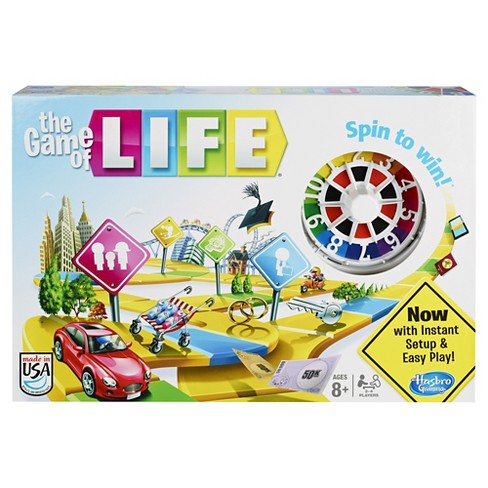
Game of Life: Medieval Theme

Image result for board game of life

This is a thematic variation on the Game of Life–it’s the Medieval Game of Life. As a start, game play is much shorter than 45 minutes. It usually runs about 20 minutes tops; there are not that many spaces (i.e., shorter lifespan).

For example, the decision points for Get Married! and Have Children! occur much earlier in game play and are modified from being the player’s choice to being requirements. Career choices are also different. There’s a few, for example:

  • be a candlestick maker
  • bear many children
  • become a monk

Spaces with random events are of course updated as well:

  • Ox cart crushes your oldest son’s leg. Go back five spaces.
  • Invaders destroy your barley crop. Go back three spaces.
  • Thanks! You helped a neighbor re-thatch a roof. Receive a goose.

Cyclical events are true to the times:

  • Borrow farm equipment from your neighbor. Pay two pigs.
  • Sell excess grain from your crop. Build a new oven.
  • Pay annual tax to the governing authorities. No shoes for the family.

The current Game of Life tends to reflect the experience of privileged natural-born US citizens. Hasbro has an opportunity to broaden the board game spectrum by balancing their offerings with thematic games like: Medieval Life, Developing Nation Life, and Immigrant Life.

Risk: Modern and Maniacal

Image result for board game risk

How about updating the types of military force in the game of Risk? Forget the cannons, horses, and miniature soldiers. Let’s change the figures to drones, attack helicopters, and computers (for cyberattacks).

Rather than rolling dice to build random battle outcomes, players are charged money in order to go to war. The player with the largest amount of money going into the battle automatically wins that battle.

The game is probably also due for a re-branding. Here’s a couple of suggested titles:

  • Maximum Monroe Doctrine
  • Modern Napoleon
  • My First Reich
  • Megalomania

Battleship: Developing Nation

Image result for battleship board game

Seems like youngsters would learn a valuable lesson in economics if Hasbro would incorporate an additional element: the cost of each missile and a finite number of missiles.

The concept is simple. Game play takes the approach of being a struggling navy in a developing nation. Rather than play the role of the United States with a seemingly endless supply of white/red pegs to fire into the ocean, ballistics are carefully measured.

Think about it Timmy…. On your next turn do you really want to fire a missile into B5 when you already know there isn’t a ship in B4 or B6? You’ve only got seven missiles left and there’s still a battleship and a patrol boat out there.

Every time a missile is fired, a player draws a random Disaster card. Cards have outcomes like the following:

  • Spend more to get equipment for missiles. Can’t afford medicine shipment. 200 people die.
  • Children are removed from school to go to work at missile factory. Literacy rate decreases 5%.
  • Young graduates are diverted from medicine to engineering armaments. Infant mortality increases 5%.

While at it, I’d suggest renaming the game: “Guns or Butter.”

#roughdayatgamestore #notsocheerful #shallweplayagame?

Conversations in my Car

I don’t think I’m alone when I admit I’ve had dozens of conversations with other drivers on the road–people who can’t hear me, aren’t looking at me, and quite often are perhaps not even aware of my existence. I further admit the word “conversation” is a generous term. In truth, it’s a one-sided diatribe where I’m the only one speaking but I simply imagine the other person’s responses.

These are my on-the-road monologues spurned on by another driver’s actions. The other driver, say, quickly cuts in front of me–in my lane (I tend to get very possessive of parts of the highway while driving). So when this driver cuts in front of me in my personal space, I say something to the effect of: “Oh, of course! After you!” with a wave of my hand and a superior attitude of snarkiness.

For an incredibly slow driver, I might offer some instruction: “Under your right foot you’ll find a pedal. Pushing this down makes the car go… That’s right… Can you see how the outside goes by you a little faster?” My condescending tone seems to help me feel justified in my maintaining an admittedly-less-than-safe space between our vehicles.

For a driver quickly slowing down and failing to signal before turning I might have to quickly look up from my cell phone. Unfortunately, the other driver didn’t get to hear my sing-song remark: “Oops! My bad! I forgot that everyone knows you turn left on Maple Street!”

These exchanges are the epitome of the maxim: we judge others by their actions and we judge ourselves by our motives. Of course I’m the safe and courteous driver!

(Wait, did that guy passing just honk at me?)

For highway and street traffic it’s unlikely another driver can read my lips, see my face, or will ever see me again in traffic. It’s a whole different scenario in parking lots. Imagine a large parking lot where spaces are scarce. From a row away I spot an open parking space. I quickly drive to the end of the aisle, whip around to claim my prize only to find: another car is just pulling into the space.

(As an aside, and you probably already knew this, but the person who takes my spot is always driving a car much newer and nicer than my own. Which logically makes the person driving it very arrogant, beautiful/handsome, and wealthy. I am deeply assured the driver smugly feels entitled to taking my spot. The person could easily park several rows over. In fact, the driver is so entitled and so privileged looking over the rim of their sunglasses [they absolutely must be wearing sunglasses], that they wouldn’t even begin to imagine it in such a vile term as theft. It is, merely another gold-laced dew-drop type of experience in their flawless life.)

So, when that perfect person pulls their perfect car into my space, I exclaim with tremendous hurt: “Hey! That’s MY spot!” My offense is deep. That space has been rightfully mine since I spied it out ever-so-long 8 seconds ago!

Fortunately, righteousness prevails in the ineffable justice of the parking garage as I discover that a parking space opposite the one stolen from me is open. While it was not my first choice, I can claim it as an equally-convenient parking space.

(Who honked? Oh wait, was she trying to get in my space?)

Of course, I’m slightly self-conscious of my outcry when my parking space was maliciously taken from me–its rightful owner. I don’t want to get out of my car right away lest I make eye contact. I’ll just sit here in my seat for a few moments… pretending to look at something mission-critical on my phone or furtively looking for some imaginary item in the glove box. Anything that allows me to avoid eye contact with the beautiful/handsome/smug person I’m imagining walking by my car in their sunglasses and perfect haircut.

#drivingmecrazy #thatsmyparkingspot #firstworldparkingproblems

Lost and Found

My favorite attraction at every amusement park is the Lost and Found office. It’s always near the entrance gates, never has a long line, and is oodles of fun. Here’s a few ideas of things to say to those park employees:

  • Hello. I was here when I was four and a half. I lost my favorite teddy bear. The yellow with white paws. Do you guys have that?
  • Hi there. The doctor found I gained 15 pounds. Can you help me lose it?
  • Hi. Ummmm. A couple of years ago, a friend and I had an argument. I feel bad about it now. I told him to get lost. Is he in? I’d like to apologize.
  • Hey there, if I can get some stuff from around the park and bring it back here, what’s the finder’s fee? Like, do you pay more for purses and wallets?
  • Hi. Hoping you can help me…. I was at my office yesterday and misplaced the thumb drive. It had our PowerPoint for our division’s annual report. Since you’re the closest Lost and Found office I thought you might have it.
  • One ticket please…. Gotta say, it’s kind of a lame name for the ride. “Scavenger Hunt” would be way better. Anyway, where’s the list of the things I need to find?
  • Shhhh. Just take the briefcase. Is there a fee for you to lose this, or is making it go away just included in the admission price?
  • Can you please help me find the Lost and Found office?
  • I’m curious…. if someone comes to the park alone and becomes disoriented, are you required to take that person into custody since they are lost? And, since that person is by themselves, are they ever allowed to leave since no one is looking for them and so are never found? Wait… are you an employee or held against your will as one of the Lost Ones?!
  • Hi there. Just to confirm: I was with my big group and I think I lost them. Can you confirm I won’t be found?

#lostandfound #thingsidreamaboutsaying

Time for an Update

It’s time for an update. Let’s be honest, we are using some anachronistic phrases and points of reference. Just as a start, here’s two we need to work on.

Constellations

Let’s be honest: Orion’s Belt? Cassiopeia? Hydra? Does anyone know who, or what, these are? Seemingly every ancient civilization, enjoying unpolluted night skies, had their own version of these midnight sentinels. I maintain: it’s high time to name some modern-day versions. I’ll toss out a few constellations that are plainly visible to me with the naked eye on a wintry night:

  • Coffee mug
  • Fork Lift
  • Light Bulb
  • Airplane
  • Paper Clip

I maintain we can craft an engaging narrative about these nighttime watchers that will enthrall generations of wilderness adventurers.

Colloquialisms

Turns of phrases develop over time it seems, and unfortunately, with rapid advances in technology, we haven’t had adequate time to build up the corresponding vocabulary. Certainly, each generation introduces new phrases (e.g., “I was jelly knowin’ Chris was making bank.”) However, there are many outmoded idioms that need updating. It’s high time we paused to work in some of the following to our everyday conversation. Here’s a starter list:

CurrentProposed
Did you hear? Jim kicked the bucket. Did you see the post? Jim lost his SIM card.
Don’t touch that dial! Don’t swipe left!
Sally is as stubborn as a mule. Sally is as stubborn as malware.
In our family I bring home the bacon. In our family I have direct deposit.
Nadia, don’t have a cow! Nadia, don’t go ALL CAPS!
Sorry, I dropped the ball.Sorry. I 404’d.

Of course, in response you might comment: “Swerve!” or offer a note of encouragement: “Yeet!” However I’m hyped and think it’s a vibe.

#millenialslang #euphamisims #idiomsfortoday #newconstellations

Timing is Everything

I’ve observed there are some important thresholds in life–points at which acceptable quickly turns to unacceptable. Here is just a short list.

  1. Going from house to house dressed in a costume exclaiming: “Trick or Treat!”
  • During the evening of October 31: Oooo! How cute! Aren’t you adorable!
  • On the morning of November 1: Get outta here before I call the police!

2. Having inflatable Christmas decorations in the front yard:

  • Any time between Thanksgiving and December 26: Oh how festive!
  • Any time after December 26: My gosh! Why can’t they take that crap down?

3. Hanging an animal figure from a tree and then encouraging children to bludgeon it with a plastic baseball bat until its candy-filled entrails burst forth.

  • During a child’s birthday party: Wow, your kids are great! They’re having so much fun!
  • The day after a child’s birthday party: Dude! What’s wrong with your kids!? They’re so violent!

4. Holding hands with complete strangers at a group event.

  • While the band is playing at the square dance: Yeehaw! This is a toe-tappin’ hoot!
  • Once the band has stopped playing at the square dance: Creep!

5. Two men having a conversation… about anything:

  • Outside of the men’s room: Acceptable and normative.
  • Inside the men’s room and at the urinals: Anathema and verboten.

#timingiseverything #nourinalchat

Conundrums

Here are some big life questions to consider.

  • Why is it acceptable to walk down a driveway but not drive down a walkway?
  • How did “orange” get to be a fruit, a color, and the color of the fruit itself? Seems like the other fruits would be pretty miffed that this one citrus fruit scored the triple crown.
  • What is someone doing exactly, if they are a “party pooper?”
  • From the cockpit, both a careless toddler and a skilled airline pilot can get a jet to land; the critical difference is in the words “to land.” Are the words a combined preposition and noun or is it an infinitive verb?
  • If Jimmy cracks corn, and one truly doesn’t care about the activities, why would one bother to write a song about it?
  • At what point in history was sliced bread established as the zenith of inventions by which all others are measured?
  • What level of faith in humanity is required to purchase an opened 1,000-piece jigsaw puzzle from a thrift store?
  • If a television series starts with a pilot, implying: “Hmmmmm we’ll see if this works out...” what does that suggest for airlines and those flying planes?
  • What decision matrix does one use to determine when a push has come to a shove?
  • What would Peter Pan’s Captain Hook be searching for in a second-hand store?
  • In the US each year, an average of 3,428 hours are spent to clarify if “biweekly” means once every two weeks or twice within one week.* What would the US economy be like if we could create a more clear set of words to make additional clarification unnecessary?
  • If one adds the words “injury” to “insult,” what is the sum?
  • Why are there weekdays and weeknights, but only weekends? Should there not be weekenddays and weekendnights?
  • In The Empire Strikes Back, Yoda claims his age to be at least 900 years old. Why is it that the rest of the galaxy has broadly adopted US English as the lingua franca, yet Yoda cannot apparently grasp the correct sequencing of nouns and verbs. If he has this much difficulty with language after nearly a millennia, should his insights be trusted?

(*) Admittedly, 3,428 hours is an estimate. Complete research on the topic is sorely warranted and would generate enthralling academic publications such as: “The Bifurcation of Biweekly: An Economic Analysis of Speech Patterns in Urban Office Environments.”

#deepthoughts #conundrums

Coldest Beer in Town

I’ve traveled throughout the US quite a bit, and I’ve repeatedly seen this boast in front of liquor stores: “Coldest Beer in Town.”

What is it about beer, specifically, that warrants such geographic one-upmanship? I’ve never seen this applied to other industries, such as:

  • Spiciest Salsa in Town (Mexican restaurant)
  • Most Stylish Haircut in Town (barber)
  • Cleanest Bedpans in Town (assisted living facility)
  • Fluffiest Pillows in Town (hotel)

Beyond the fact that this signage makes me think of a silverback gorilla pounding its chest, I am curious….

Is the boast accurate?

I have a deep desire to don a white lab coat and safety goggles. I’d like to come into a liquor store carrying some sort of sophisticated-looking gear with a probe, wires, and a series of dials and lights. It wouldn’t have to do anything scientific, it would just need to look like it would be used for something scientific. I’ve got the scene already played out in my head.

Me (inspector) enters through liquor store door carrying a briefcase-sized electronic device. Chime sounds.

Clerk: Looks confused. Hello. Can I help you?

Me: Yes, good day. Are you the proprietor of this establishment?

Clerk: Yes…

Me: Excellent. I’m Fred Filbanks with the RTV just doing a routine inspection. Begins to walk back to the cold case, carrying the equipment.

Clerk: Increasingly confused. Wait, what’s the RTV?

Me: Pardon?

Clerk: The RTV, what is it?!

Me: The R – T – V….. The Regional Temperature Validators. We’re a division of the North American Weights and Measurements office.

Clerk: What are you doing? Moving from behind the counter toward me.

Me: Sir, please be calm. We’re conducting a routine temperature inspection based on your signage.

Clerk: What signage?

Me: Sir, you have a clear exterior declaration that you have the coldest beer in this city. As such, it’s required to complete a temperature assessment.

I firmly walk back to cold case, open refrigerated door. I unpack the gear and insert an electronic probe into the area and inspect the readings on the electronic equipment. The clerk looks on befuddled. I complete the process of extending the probe into a few different sections of the cold case. After an extended awkward pause, I speak.

Hmmmm… Have you adjusted the temperature recently?

Clerk: Clearly concerned. No. I haven’t touched the temperature in months.

Me: Are you sure? Not in any of these refrigerators?

Clerk: No. What’s going on?!

Me: Well, this is…. I’m sorry to say, not good.

Clerk: What is it? What isn’t good?

Me: You sir, do not have the coldest beer in town. After gathering readings from several other locations in town, your temperatures are higher than two other liquor stores.

Clerk: So? What does that matter?

Me: Incredulous. Sir, you have clearly announced in a vinyl banner sign outside that you have the coldest beer in town. You do not. While I’m not permitted to share full details, I can tell you that both A-1 Liquor and Booze Barn have temperatures much colder than yours. Pausing and lowering my voice. I don’t wish to make a scene here, but you clearly are in violation of article 17 of the liquor store license agreement. False advertising is a serious offense.

Clerk: Clearly becoming angry, worried, and defensive. Wait! Who are you with.

Me: Sir, please calm down. These measurements have already been uploaded the regional database. This is on your establishment’s permanent record. I’m just an inspector.

Clerk: What? So what do I do?

Me: Sympathetically. There’s nothing to be done. Not now. This store’s information has now been updated in our database and the comparisons are complete. Depending on what the ruling is, you may just receive a warning. You might receive a fine.

Clerk: A fine?!

Me: Yes. Your claim of a specific most extreme-temperatured beverage is a serious offense. Had the sign read something more moderate it wouldn’t have come to this.

Clerk: What do you mean?

Me: Well, there are other statements that you could have used, such as: “Perhaps one of the colder beers in the neighborhood” or “Among the colder beverages in the area.”

I shake my head and sigh.

“Coldest… in town…” Those are just trigger words. I wish they would help you navigate these waters better when getting your permits.

Look, at this point, the best thing you could is take down the banner outside. It might not stop all your problems, but at least it won’t get any worse.

Moving to door to exit

I’m sorry I couldn’t give you better news.

Exit